3737 E State Route 36, Decatur, IL, 62521

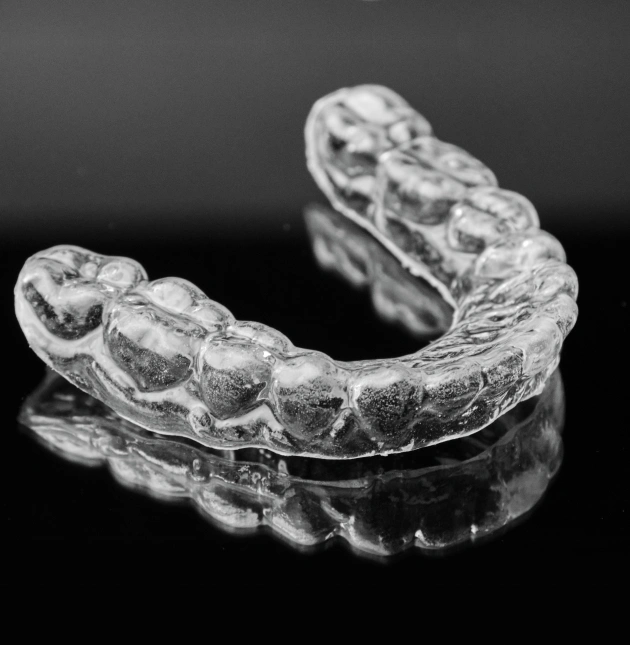
Custom Night Guards for Bruxism & Jaw Pain
Bruxism is the clinical term for grinding and clenching the teeth, and it happens most often during sleep when you have no conscious control over it. The forces involved are considerably higher than anything produced during normal chewing, and unlike chewing, they continue for extended stretches without the natural pauses that let muscles recover.
A night guard is a custom fabricated appliance worn over the teeth during sleep. It creates a protective barrier so the upper and lower teeth no longer contact each other directly, absorbing and redistributing grinding forces across a smooth surface rather than allowing them to concentrate on individual cusps and edges. Separating the teeth slightly also reduces how hard the jaw muscles are able to contract, which is why patients frequently report their morning headaches and jaw soreness improving alongside the protection of the teeth themselves.

Get Fitted for a Night Guard
What a Night Guard Prevents
- Enamel wear. Grinding flattens cusps and wears through enamel, exposing the softer dentin underneath and causing sensitivity that has no cavity to explain it.
- Chipped and cracked teeth. Sustained lateral forces fracture edges and propagate cracks that can eventually reach the root.
- Failed dental work. Bruxism is the leading cause of fractured crowns, chipped bonding, cracked porcelain veneers and broken fillings.
- Morning headaches. Overworked temporal muscles produce headaches that feel like tension headaches and are often present on waking.
- Jaw pain and joint strain. Hours of sustained clenching load the temporomandibular joints and the muscles controlling them.
- Gum recession and bone loss. Excessive occlusal forces contribute to recession and localized bone changes around heavily loaded teeth.
- Disrupted sleep. Muscle activity through the night affects sleep quality for you and often for a partner who hears it.
Who Should Consider a Night Guard?
Night guards are indicated for anyone with confirmed bruxism, patients experiencing TMJ symptoms including jaw pain, clicking and muscle soreness, and those waking regularly with headaches that trace back to overnight clenching.
They are equally important as a protective measure. Patients who have invested in crowns, veneers, bonding or implant restorations should be wearing a guard if any grinding is present, since replacing fractured cosmetic and restorative work costs far more than preventing the fracture. Patients who have completed extensive restorative treatment and want that work to last are strong candidates.
Stress and certain medications increase grinding activity, and some patients notice their symptoms fluctuate with periods of higher stress. Sleep apnea is also associated with bruxism in some patients, and where the history suggests it, we will raise the possibility of a sleep evaluation rather than treating the grinding in isolation.
Building a Guard That Fits Your Bite Precisely
Fit is the entire mechanism here, not a comfort preference. A guard that does not seat correctly can shift the bite in ways that increase strain rather than relieving it.
01
Evaluation and Bite Analysis
We examine your teeth, jaw, and grinding patterns while assessing how your bite comes together and moves.

Prev
NEXT
02
Custom Design Selection
The guard type and material are chosen based on your needs and level of wear.
Prev
NEXT
03
Accurate Records
Digital scans or impressions capture your teeth and bite for a precise fit.
Prev
NEXT
04
Fabrication
Your custom guard is created to evenly distribute pressure and protect your teeth.
Prev
NEXT
05
Fitting and Refinement
The guard is adjusted for comfort, proper seating, and balanced contact.
Prev
NEXT
06
Follow-up and Adjustments
We review your progress and fine-tune the guard to ensure long-term comfort and effectiveness.
Prev
NEXT
07
Bite refinement
Adjustments are made so your jaw closes into a balanced position and can move side to side without catching, which is what allows the muscles to relax.
Prev
NEXT
08
Follow up review
We check in after you have worn it for a period, since minor adjustments after real world use are common and make the difference between a guard that gets worn nightly and one that ends up in a drawer.
Prev
NEXT
Signs You May Be Grinding Without Knowing It
Because bruxism happens during sleep, self diagnosis is unreliable. These are the indicators that typically bring it to light:
- Waking with a sore, tired or stiff jaw
- Headaches concentrated in the temples, particularly in the morning
- Teeth that have become sensitive without any decay present
- Visible flattening across the biting surfaces or chipped enamel at the edges
- Small vertical cracks visible in the enamel of front teeth
- A partner who hears grinding at night
- Aching in the cheeks or along the jawline during the day
- Restorations that keep failing or fracturing for no obvious reason
- Indentations along the edges of the tongue or a ridge line inside the cheeks
Wear patterns are usually apparent on examination well before patients feel anything, which is one of the practical benefits of regular checkups. Intraoral camera images let you see the flattening and chipping directly rather than taking it on description.
Insurance Coverage and Payment for Night Guards
Coverage for night guards varies more than for most dental treatment. Many dental plans include them as a covered benefit, frequently with a frequency limitation restricting replacement to once every several years. Some plans classify them under TMJ treatment, which certain policies exclude by name. In some cases where the appliance is being provided for a diagnosed temporomandibular disorder rather than tooth protection alone, medical insurance may apply.
Decatur Dental Care accepts most PPO plans, is a Delta Dental provider, and files claims for our patients. We verify how your specific plan handles occlusal guards before treatment and provide a written itemized estimate showing your coverage and your portion. CareCredit financing is available, along with cash, check, Visa, Mastercard and Discover.
Grinding Damage Accumulates Every Night It Goes Unprotected
Worn enamel does not grow back, and cracked teeth do not heal. A night guard is one of the least expensive preventive appliances in dentistry relative to what it protects. Call 217-423-2400 or request an appointment.
Request Appointment