3737 E State Route 36, Decatur, IL, 62521
Closing the Space Left by a Missing Tooth
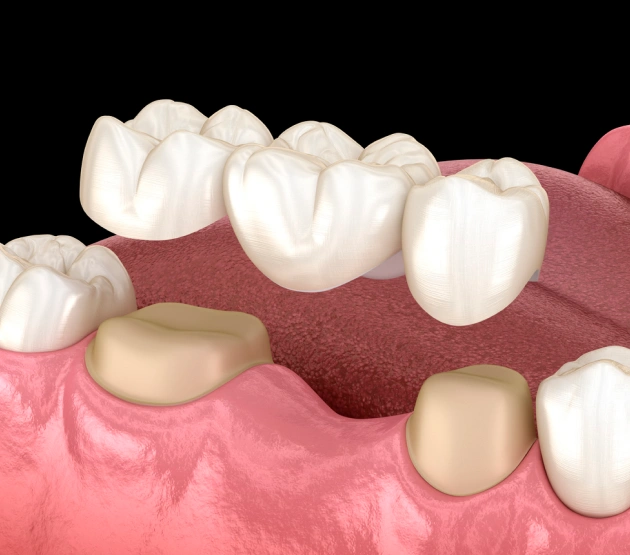
A dental bridge replaces one or more missing teeth using the neighboring teeth as support. Crowns are placed on the teeth on either side of the gap, and a replacement tooth, called a pontic, is joined between them as a single connected unit. Once cemented, the bridge is fixed permanently in place. It is not removed for cleaning and it does not shift while you eat or speak.
Bridgework is genuinely both art and science. The replacement tooth has to match the shade and contour of what surrounds it, sit in correct relationship to the gum tissue, and function under real chewing forces for years.

Ask About Bridge Options
Why Closing the Gap Matters More Than Appearance
- Stops adjacent teeth from drifting. Teeth migrate toward open space, tilting and rotating out of alignment over time.
- Prevents the opposing tooth from over erupting. With nothing to bite against, the tooth above or below the gap gradually grows down or up out of position.
- Restores efficient chewing. Missing molars push you onto the other side, overloading those teeth and often the jaw joint.
- Protects your bite relationship. Shifting and over eruption change how the whole arch comes together, which can create new wear and joint symptoms.
- Improves speech clarity. Missing front teeth affect how certain sounds are formed.
- Supports facial contour. Teeth support the surrounding soft tissue, and gaps allow it to collapse inward.
Is a Bridge Right for Your Situation?
A fixed bridge is a strong option when you have one or a few missing teeth in a row and the teeth on either side of the space are healthy enough to serve as anchors. Adequate bone support around those neighboring teeth and healthy gum tissue are both prerequisites, since the bridge relies entirely on them.
Bridges also suit patients who want a permanently fixed solution without surgery, and those for whom an implant is not practical due to bone volume, medical considerations or preference. Where the supporting teeth already need crowns for other reasons, a bridge is particularly efficient, because the same treatment addresses both problems at once. Our team reviews digital X-rays and Panorex imaging to assess bone levels and root health before recommending an approach, and will tell you plainly if a different option would serve you better.
Designing and Placing Your Bridge
Bridge treatment generally spans two visits over a few weeks.
01
Evaluation and Planning
Digital X-rays and imaging assess the supporting teeth and determine the best design for your bridge.

Prev
NEXT
02
Tooth Preparation
The anchor teeth are numbed, reshaped, and cleared of any decay or old restorations.
Prev
NEXT
03
Impression or Scan
A detailed impression or digital scan captures the prepared teeth, gap, and your bite.
Prev
NEXT
04
Temporary Bridge
A temporary bridge is placed to protect the area and maintain appearance and function.
Prev
NEXT
05
Final Bridge Fitting
At your second visit, the permanent bridge is checked for fit, color, and bite.
Prev
NEXT
06
Cementation and Care
The bridge is secured in place, polished, and we guide you on how to clean and maintain it.
Prev
NEXT
Cleaning Under a Bridge Is the Whole Ballgame
Because the units are connected, floss cannot pass between them the way it does between natural teeth. The space beneath the pontic collects plaque, and this single detail determines whether a bridge lasts five years or twenty. A floss threader or superfloss lets you pass floss underneath and sweep the area clean. Interdental brushes and a water flosser both work well for daily maintenance around and under the bridge. We will demonstrate the technique at your placement appointment and check the tissue underneath at every recall visit.
What a Bridge Does Not Address
It is worth being straightforward about this. A bridge replaces the visible tooth, not the root, so the bone in the area of the missing tooth continues to resorb gradually over the years since nothing is stimulating it. This is not a reason to avoid a bridge, and for many patients a bridge remains the right choice for cost, timeline, bone availability or medical reasons. It is simply information you deserve when weighing options, and it is part of why we walk through implants, bridges and partial dentures together rather than presenting a single recommendation.
Insurance Coverage and Payment Arrangements
Bridges are classified as major restorative treatment on most dental plans, typically covered around fifty percent after any deductible, with your annual maximum and any waiting period both applying. Because a bridge involves multiple units, it is common for the total to exceed a single year's benefit maximum. Decatur Dental Care accepts most PPO plans, is a Delta Dental provider, and files claims for our patients. We verify benefits and provide an itemized written estimate before treatment starts, and where it helps, treatment can sometimes be sequenced across benefit years. CareCredit financing is available, along with cash, check, Visa, Mastercard and Discover.
The Longer a Gap Stays Open, the Harder It Becomes to Close
Once neighboring teeth have tilted and the opposing tooth has dropped, restoring the space requires considerably more work. Call 217-423-2400 or request an appointment to review your options.
Request Appointment