3737 E State Route 36, Decatur, IL, 62521

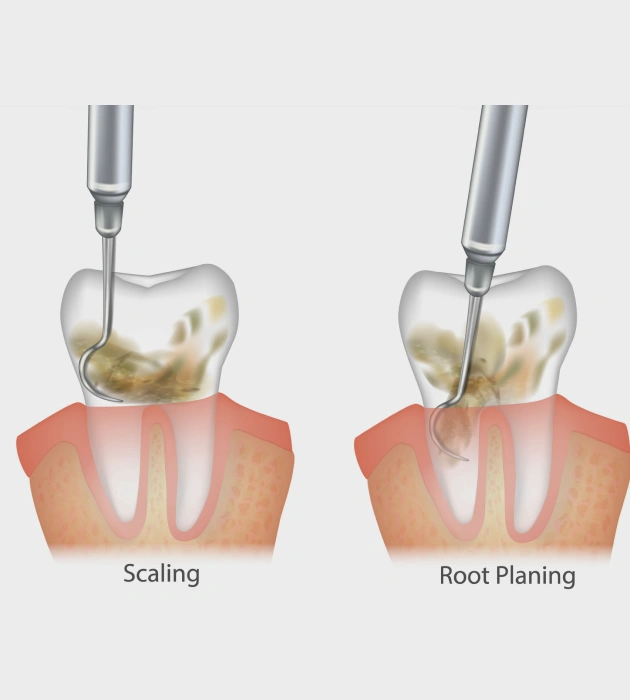
Deep Cleaning to Help Halt Periodontal Disease
Scaling and root planing is the foundational treatment for gum disease that has progressed past gingivitis. It is often called a deep cleaning, and while that description is accurate enough, it undersells what is actually happening.
Scaling removes plaque, calculus and bacterial deposits from the root surfaces inside periodontal pockets, well below where a routine cleaning reaches. Root planing then smooths those root surfaces, and this second step is what makes the treatment work. A rough, contaminated root surface gives bacteria a textured surface to colonize and prevents gum tissue from reattaching. A smooth, clean root allows the tissue to reattach snugly against the tooth, which reduces pocket depth and closes off the space that was harboring the infection.
The objective is not simply a cleaner mouth. It is halting active bone destruction and creating conditions where the tissue can return to a stable, maintainable state.

Schedule a Periodontal Assessment
What This Treatment Accomplishes
- Stops active bone loss by removing the bacterial source driving the inflammatory response
- Reduces pocket depth as inflammation resolves and tissue reattaches to the cleaned root surface
- Eliminates bleeding in the majority of treated sites within weeks
- Resolves persistent bad breath caused by bacteria in deep pockets
- Firms up the gum tissue from swollen and red back toward firm and pale pink
- Preserves teeth that would otherwise progressively loosen as support is destroyed
- Creates a maintainable baseline so home care and maintenance visits can keep the condition stable
- Prepares the mouth for other treatment, since implants, crowns and orthodontics all require healthy periodontal tissue
When Deep Cleaning Becomes Necessary
Scaling and root planing is indicated when periodontal charting reveals pocket depths beyond the healthy range, when bleeding on probing shows active inflammation, and when X-rays confirm bone loss around the affected teeth. All three findings together establish that the disease has moved past the soft tissue stage.
Patients typically arrive at this diagnosis in one of a few ways. Some notice bleeding, recession or bad breath and come in. Others have not seen a dentist in years and the disease has progressed silently. Some are longstanding patients whose charting shows deepening pockets over successive visits, caught before extensive damage occurred.
There are cases where scaling and root planing alone is insufficient. Very deep pockets, significant bony defects and advanced mobility may require surgical intervention or a periodontist's involvement. We tell you directly when that applies rather than performing a treatment unlikely to resolve the problem.
What Happens During Your Deep Cleaning Appointments
The procedure is methodical, and each treated area gets the same thorough attention.
01
Chart Review
We review your periodontal chart, including pocket depths, bleeding points, and bone levels, so you understand which areas are being treated and why.

Prev
NEXT
02
Anesthesia
The treatment area is fully numbed with local anesthetic to ensure comfort. Nitrous oxide sedation is available if needed.
Prev
NEXT
03
Ultrasonic Scaling
High-frequency vibration and water irrigation are used to break up and flush away larger deposits from below the gum line.
Prev
NEXT
04
Hand Scaling & Planing
Fine instruments remove remaining deposits and smooth the root surfaces to support proper healing and reattachment.
Prev
NEXT
05
Irrigation & Antibiotic
The pockets are flushed to remove debris and bacteria, and a localized antibiotic may be placed in deeper areas when needed.
Prev
NEXT
06
Post Treatment Care
You receive clear instructions for managing sensitivity, cleaning the area, and supporting healing in the days following treatment.
Prev
NEXT
Periodontal Maintenance Is Not the Same as a Cleaning
Once you have been treated for periodontal disease, your recall visits change permanently, and this catches patients off guard when they see it on the schedule and the statement.
Periodontal maintenance replaces standard prophylaxis cleanings and occurs at three to four month intervals rather than six. The interval is based on how quickly bacterial populations recolonize treated pockets, which happens within roughly three months. Maintenance interrupts that cycle before the disease can reactivate.
The appointment itself is also different. It includes cleaning below the gum line in previously treated sites, updated pocket measurements at every visit, and monitoring for any site showing signs of recurrence. It is ongoing disease management rather than preventive cleaning.
Patients who return to six month intervals after periodontal treatment experience recurrence at a substantially higher rate. Scaling and root planing without committed maintenance afterward is treatment that is likely to be undone, which is why we are direct about this expectation before treatment rather than after.
Insurance Coverage and Payment for Deep Cleanings
Scaling and root planing is generally covered under basic or major services depending on your plan, commonly at a meaningful percentage after any deductible. It is billed by quadrant, so a full mouth case involves four units of treatment, which affects how it draws against your annual maximum.
Insurers typically require documentation of pocket depths and radiographic bone loss to approve the treatment, which is one more reason thorough charting matters. Periodontal maintenance visits are usually covered, though plans vary in how many they allow per year. Some cover four, others limit coverage to two and leave the remainder as your responsibility. Arestin placement is covered by some plans and excluded by others.
Decatur Dental Care accepts most PPO plans, is a Delta Dental provider, and files claims for our patients. We verify your periodontal benefits specifically, including maintenance frequency limits, and provide a written itemized estimate before treatment begins. CareCredit financing is available for full mouth cases, and we accept cash, check, Visa, Mastercard and Discover.
Every Month of Active Gum Disease Costs You Bone That Will Not Come Back
Scaling and root planing is the point where progression stops, and the earlier it happens the more support your teeth retain. Call 217-423-2400 or request an appointment.
Request Appointment